
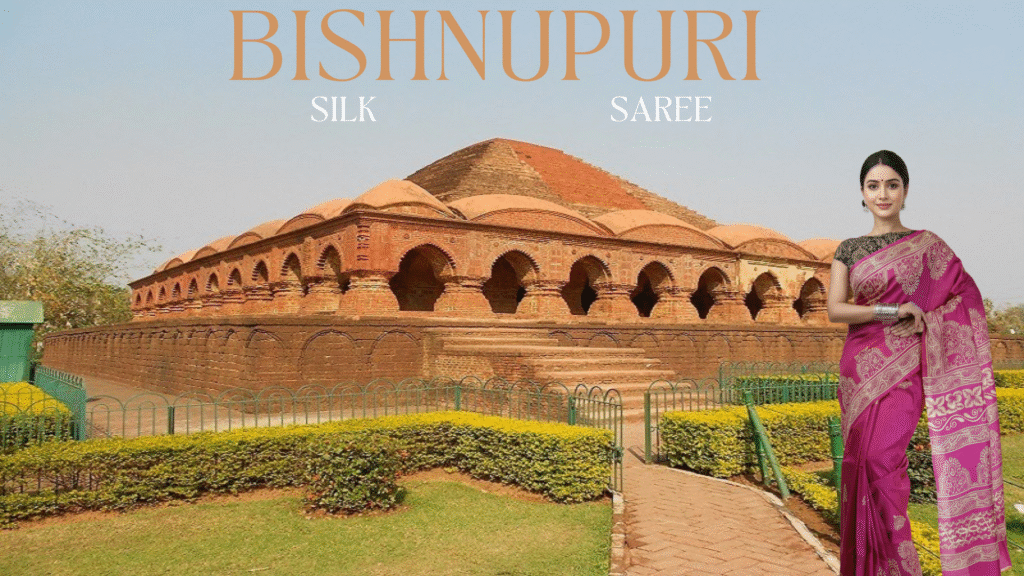
Bishnupuri Silk Saree
The Ultimate Guide to Bengal's Timeless Handloom Heritage
When you think of India's rich textile heritage, the Bishnupuri silk saree stands as a testament to centuries of artistic excellence, cultural significance, and unmatched craftsmanship. Originating from the historic temple town of Bishnupur in West Bengal's Bankura district, these exquisite sarees represent more than just elegant attire—they embody the soul of Bengali culture, the dedication of master weavers, and a thousand-year-old tradition that continues to thrive today.
At VAARNALI, we're passionate about preserving this magnificent heritage by bringing you authentic, GI-tagged Bishnupuri silk sarees while supporting the artisan communities who keep this ancient craft alive. Whether you're a saree connoisseur, a first-time buyer, or simply curious about India's handloom traditions, this comprehensive guide will take you on a journey through the history, artistry, and contemporary relevance of the Bishnupuri silk saree.
Understanding the Bishnupuri Silk Saree: What Makes It Special?
The Bishnupuri silk saree is a handwoven silk saree crafted in Bishnupur, a UNESCO Heritage town renowned for its terracotta temples and rich cultural legacy. The tradition dates back to the Malla dynasty when King Jagat Malla ruled Mallabhum, making these sarees over a thousand years old.
Key Characteristics of Bishnupuri Silk Saree:
Pure Mulberry Silk
Every authentic Bishnupuri silk saree is woven using high-quality mulberry silk threads, providing exceptional softness, natural sheen, and durability that improves with age.
Temple-Inspired Designs
The intricate motifs are heavily influenced by Bishnupur's magnificent terracotta temples built during the Malla dynasty, featuring geometric patterns, mythological narratives, and nature-inspired elements.
Handloom Craftsmanship
Each Bishnupuri silk saree is meticulously woven on traditional pit looms, with artisans taking anywhere from seven to thirty days based on design complexity.
GI Tag Certification
In 2011, the Baluchari Sari was granted Geographical Indication status for West Bengal, ensuring authenticity and protecting weavers' rights.
Rich Cultural Heritage
The Bishnupuri silk saree isn't just clothing—it's considered a family heirloom passed down through generations, especially worn during festivals like Durga Puja and cultural events.
The Fascinating History of Bishnupuri Silk Saree
Origins in the Malla Dynasty (16th-19th Century)
The legacy of Bishnupuri silk sarees dates back several centuries when the Malla kings, who ruled from the 16th to 19th century, introduced and patronized silk weaving in Bishnupur. These rulers were great patrons of art and culture, encouraging various art forms including silk weaving.
The town of Bishnupur, named after Lord Vishnu whom the Malla kings worshipped, became a thriving center of arts, music, and crafts. The terracotta temples built during their reign became a major influence, with mythological stories from temple walls being woven onto sarees.
The Baluchari Connection
The history of Bishnupuri Silk started in the 18th century in the village of Baluchar, located in the Bankura district of West Bengal, which was popular for weaving Baluchari sarees. The Nawab of Bengal, Murshid Quli Khan, was so impressed with Baluchari beauty that he brought weavers from Banaras to settle in Baluchar village in Murshidabad.
However, disaster struck when floods in the Bhagirathi River severely impacted the weaving tradition, forcing weavers to migrate. The weaver community moved to Bishnupur in Bankura, a relatively dry zone, where the Malla dynasty rulers welcomed these skilled artisans and helped them settle and practice their craft.
The Colonial Era and Decline
In the 18th and early 19th centuries, silk weaving flourished when the East India Company traded embroidered scarves and floral fabrics made of fine Bishnupuri silk. However, during British rule, the craft declined due to political and financial reasons, and most weavers were compelled to give up the profession.
The 20th Century Revival
In the first half of the 20th century, famous artist Subho Thakur (full name Subhagendranath Tagore), felt the need to revive the rich Baluchari tradition. He invited Akshay Kumar Das, a master weaver from Bishnupur, to learn jacquard weaving techniques. Das returned to Bishnupur and worked with financial support from Hanuman Das Sarda of Silk Khadi Seva Mandal.
The revival brought about by Subho Thakur through jacquard weaving greatly simplified the process and reduced the time to weave a saree, making production more viable while maintaining artistic integrity.
Modern Era and GI Tag Recognition
Today, Bishnupur continues as an important cottage industry with about 15% of its population employed in the handloom sector. The 2011 GI tag certification for Baluchari sarees recognized the unique craftsmanship and protected authentic Bishnupuri silk sarees from imitations.
Types of Bishnupuri Silk Saree: A Comprehensive Classification
The Bishnupuri silk saree encompasses several distinct varieties, each with unique characteristics and cultural significance:
1. Baluchari Silk Saree
The most famous type of Bishnupuri silk saree, Baluchari sarees are renowned for their narrative designs.
Key Features:
- Epic tales from Ramayana and Mahabharata inspire narrative designs along with animal and floral motifs
- Elaborate pallu (end piece) featuring mythological scenes
- During Mughal and British eras, designs depicted nawabs in horse carriages and even European East India Company officers
- Takes approximately five to six days with two weavers working in shifts
- Traditionally made with tassar silk, now also available in mulberry silk
- Price range: ₹8,000 - ₹40,000
Occasions: Perfect for weddings, religious ceremonies, and cultural events where you want to make a statement.
2. Swarnachari Silk Saree
Swarnachari made Bishnupuri silk popular, prepared using gold and silver threads for royalty and nobility.
Key Features:
- Extensive use of gold and silver zari work
- Rich, regal appearance with metallic sheen
- Heavier than other Bishnupuri varieties
- Traditional royal color palettes: deep maroon, royal blue, emerald green
- Price range: ₹15,000 - ₹60,000+
Occasions: Ideal for bridal trousseaus, grand wedding ceremonies, and prestigious celebrations.
3. Bishnupuri Pure Silk Saree (Lightweight)
In addition to Baluchari sarees, Bishnupur produces fine, lightweight silk sarees with soft, smooth texture that drape beautifully.
Key Features:
- Every one meter of Bishnupuri silk contains 26 grams of silk, more than Murshidabad silk which has 18 grams
- Available in 2-ply, 3-ply, and 4-ply variations, with more plies meaning finer quality
- Features block printed, acid printed, and batik-painted designs
- Comfortable for daily wear and warm climates
- Price range: ₹5,000 - ₹18,000
Occasions: Perfect for office wear, casual events, festivals, and everyday elegance.
4. Bishnupuri Inchi Par Saree
Characterized by wide, intricate temple-inspired borders measuring 2-4 inches.
Key Features:
- Traditional "inchi par" (inch-wide) border design
- Geometric patterns inspired by temple architecture
- Contrasting border and body colors
- Multiple layer designs creating visual depth
- Price range: ₹7,000 - ₹25,000
Occasions: Suitable for festivals, pujas, and traditional celebrations.
5. Tussar and Muga Bishnupuri Silk
While Bishnupur is famous for mulberry silk, weavers also experimented with wild silks like Tussar and Muga to give unique appearance to the fabric.
Key Features:
- Natural golden hue of Tussar silk
- Slightly coarser texture than mulberry silk
- More affordable pricing
- Eco-friendly and sustainable
- Price range: ₹4,000 - ₹15,000
Occasions: Great for daytime events, cultural programs, and eco-conscious buyers.
6. Dhoop Chhaon Saree
The Bishnupur sari is known as Dhoop Chhaon (double shade) saree due to complex interplay of colors that appear different depending on viewing angle or light intensity.
Key Features:
- Color-changing effect based on light and angle
- Sophisticated weaving technique
- Elegant and contemporary appeal
- Unique visual characteristic
- Price range: ₹8,000 - ₹22,000
Occasions: Perfect for evening parties, receptions, and sophisticated gatherings.
Bishnupuri Silk Saree vs Other Premium Indian Silks
Understanding how Bishnupuri silk saree differs from other famous Indian silk varieties helps appreciate its unique position:
Bishnupuri Silk Saree vs Kanchipuram Silk Saree
| Feature | Bishnupuri Silk Saree | Kanchipuram Silk Saree |
|---|---|---|
| Origin | West Bengal, Bishnupur | Tamil Nadu, Kanchipuram |
| Silk Type | Mulberry/Tassar silk | Pure mulberry silk |
| Weaving Style | Jacquard loom, narrative designs | Traditional contrast borders, temple motifs |
| Weight | Light to medium (more wearable) | Heavy (5.5-9 kg) |
| Design Focus | Storytelling, mythological scenes | Geometric, temple architecture |
| Zari Work | Moderate (except Swarnachari) | Extensive gold/silver zari |
| Draping | Soft, fluid, comfortable | Structured, stiff, formal |
| Price Range | ₹5,000 - ₹60,000 | ₹10,000 - ₹150,000+ |
| Best For | Daily wear to grand occasions | Weddings, formal ceremonies |
Winner for Comfort: Bishnupuri silk saree
Winner for Grand Weddings: Kanchipuram silk saree
Bishnupuri Silk Saree vs Banarasi Silk Saree
| Feature | Bishnupuri Silk Saree | Banarasi Silk Saree |
|---|---|---|
| Cultural Influence | Bengali, temple art | Mughal-inspired |
| Characteristic Feature | Narrative storytelling designs | Heavy brocade work |
| Weaving Time | 7-30 days | 15 days - 6 months |
| Motifs | Mythology, nature, geometric | Floral, paisley, Mughal patterns |
| Wearability | Lightweight, comfortable | Heavy, formal |
| Versatility | High (daily to wedding) | Medium (mostly formal) |
| Price Range | ₹5,000 - ₹60,000 | ₹8,000 - ₹200,000+ |
Winner for Versatility: Bishnupuri silk saree
Winner for Opulence: Banarasi silk saree
What Makes Bishnupuri Silk Saree Unique?
- Storytelling Tradition: Unlike other silks, Bishnupuri silk sarees are renowned for narrative designs that tell complete mythological stories.
- Lightweight Comfort: Bishnupuri silk sarees are soft, easy to drape, and suitable for both casual and formal wear.
- Cultural Depth: The direct connection to Malla dynasty and terracotta temple art gives these sarees unparalleled historical significance.
- Affordability: Compared to Kanchipuram and Banarasi, Bishnupuri offers authentic handloom silk at more accessible prices.
- Versatile Options: From lightweight daily wear to heavy bridal pieces, Bishnupuri offers variety unmatched by other silk traditions.
VAARNALI's Commitment to Authentic Bishnupuri Silk Saree
At VAARNALI, we don't just sell Bishnupuri silk sarees—we preserve a heritage, support artisan communities, and ensure every customer receives genuinely authentic handloom treasures.
How VAARNALI Ensures Authenticity
1. Direct Partnerships with Weaver Cooperatives
We work directly with registered weaver cooperatives in Bishnupur, Bankura district, eliminating middlemen and ensuring:
- Fair prices paid directly to artisans
- Quality control at source
- Authentic handloom production verification
- Long-term sustainable relationships with weaving families
2. GI Tag Certification
Every Bishnupuri silk saree in our collection comes with:
- Geographical Indication certification documentation
- Weaver identification details
- Production location verification
- Certificate of authenticity with each purchase
3. Quality Verification Process
Our multi-step authentication includes:
- Physical inspection of each saree by textile experts
- Burn test verification for pure silk content
- Handloom irregularity checks (proving hand-weaving)
- Color fastness testing
- Border and pallu design authentication
- Weight and ply verification
4. Transparent Pricing
VAARNALI believes in ethical pricing:
- Clear breakdown of weaver payment, materials, and margins
- No hidden costs or surprise charges
- Competitive pricing without compromising artisan welfare
- Seasonal sales that don't undercut weaver payments
5. Traceability
Every saree comes with:
- Weaver's name and cooperative details
- Village of origin
- Weaving timeline
- Design inspiration story
- Care instructions in multiple languages
How VAARNALI Supports Bishnupuri Silk Saree Weavers
While Baluchari silk sarees sell for ₹5,000 to ₹30,000, weaver artisans often earn only ₹300 per saree due to exploitation by middlemen and moneylenders. VAARNALI is committed to changing this reality.
Our Weaver Support Initiatives:
1. Fair Trade Pricing Model
- Weavers receive 80-90% of the final retail price
- Advance payments for large orders to prevent debt cycles
- Festival bonuses and performance incentives
- Price protection against market fluctuations
2. Skill Development Programs
- Training in contemporary design aesthetics
- Workshops on quality enhancement
- Introduction to natural dye techniques
- Business management and costing education
- Digital literacy for online market access
3. Raw Material Support
Since Bishnupur is not suitable for silkworm rearing, raw silk comes from other regions like Murshidabad and Malda. VAARNALI helps by:
- Bulk procurement of quality raw silk at better rates
- Direct sourcing partnerships with silk reeling units
- Quality assurance of materials before distribution
- Credit facilities for raw material purchase
4. Healthcare and Social Security
- Health insurance coverage for weaver families
- Children's education scholarship program
- Emergency financial assistance fund
- Retirement benefits for senior artisans
- Eye care camps (crucial for weavers)
5. Market Access and Promotion
- Featuring weaver stories on VAARNALI website and social media
- Conducting weaver-consumer virtual meet programs
- Participation in national and international exhibitions
- Collaborations with fashion designers for exposure
- Creating demand for lesser-known Bishnupuri varieties
Government Support and Challenges Facing Bishnupuri Silk Saree Weavers
Government Initiatives Supporting Bishnupuri Silk Saree
- Geographical Indication (GI) Tag Protection: The 2011 GI tag for Baluchari sarees from Bankura district legally protects the name and ensures only authentic products from the region can use the designation.
- National Handloom Development Programme (NHDP): The Comprehensive Handloom Development Scheme (CHDS) provides need-based funding for technology advancement, product development, Common Facility Centers, Marketing Complexes, Dye Houses, and Yarn Depots.
- West Bengal Handloom and Khadi Weavers Financial Benefit Scheme 2024: Launched on March 7, 2024, this scheme provides individual weavers with ₹5,000 for work shed repair/loom modification and ₹10,000 for raw material assistance through Tantuja.
- Paschim Banga Resham Shilpi Mahasangha: This State Level Apex Cooperative Society on silk products, registered in 1958, provides pension of ₹1,000 per month to weavers above 60 years of age with no income source and 10+ years of cooperative membership.
- Yarn Supply Scheme: Through the National Handloom Development Corporation, all types of yarn are made accessible at Mill Gate Price, with hank yarn for cotton and domestic silk receiving a 10% price subsidy.
- Handloom Marketing Support: The government provides 10% price subsidy on hank yarn, plus an additional 5% marketing incentive on net sales turnover up to ₹5 lakh.
- Insurance and Healthcare: Group Insurance Scheme covers weavers aged 18-59 who derive 50% of annual income from weaving. Rashtriya Swasthya Bima Yojana (RSBY) provides health insurance with hospitalization coverage.
- Tourism Integration: A survey for developing handloom and handicraft integrated Tourism Circuit at Purulia-Bankura-Bishnupur is complete, aiming to expand market opportunities.
Persistent Challenges and Imbalances
Despite government support, Bishnupur's Baluchari silk artisans face severe difficulties with about 15,000 people involved in production, most working as daily wage laborers without owning looms.
Major Challenges:
- Inadequate Compensation: After completing a saree, artisans earn a measly ₹300 while big owners and middlemen exploit them. This disparity persists despite retail prices of ₹5,000-₹30,000.
- Cooperative Society Collapse: Most cooperatives set up during Left rule have closed, leaving weavers without organized support structures.
- Raw Material Costs: Raw material prices, including silk and other ingredients, remain high, making sarees expensive and reducing demand.
- Lack of Ownership: The majority of weavers don't own looms, forcing them into exploitative relationships with loom owners and moneylenders.
- Financial Distress: As recalled by 70-year-old artisan Shyam Sundar Bit, in the 1970s weavers received only ₹20 for a full day's work, and many couldn't fulfill daily food needs.
- Limited Market Access: Weavers struggle with direct market reach, remaining dependent on middlemen who capture most profits.
- Younger Generation Migration: Low incomes drive younger generations away from weaving, threatening the craft's continuity.
- Competition from Power Looms: Cheaper power loom imitations undercut authentic handloom sales, despite inferior quality.
What More Needs to Be Done?
Policy Recommendations:
- Increase minimum wage standards for handloom weavers
- Provide interest-free loans for loom ownership
- Establish direct marketing platforms bypassing middlemen
- Create designer collaboration programs
- Expand pension coverage and healthcare benefits
- Implement strict enforcement against fake handloom products
- Develop apprenticeship programs with stipends for youth
- Create weaver-owned retail outlets in metro cities
How to Identify Authentic Bishnupuri Silk Saree: Expert Guide
With the market flooded with imitations, knowing how to verify authenticity is crucial:
Physical Verification Tests
1. The Burn Test
- Pull a thread from the saree edge
- Burn it carefully
- Genuine silk: Burns slowly, smells like burning hair, crumbles to ash
- Synthetic: Melts into plastic beads, chemical smell
2. The Touch Test
- Genuine Bishnupuri silk: Soft, smooth, slightly cool to touch, warms quickly when held
- Imitation: May feel slippery, overly shiny, doesn't regulate temperature
3. The Weave Test
- Examine borders and pallu closely under light
- Handloom: Slight irregularities, variations in thread tension, organic imperfections
- Power loom: Perfectly uniform, machine-like consistency
4. The Weight Test
- Authentic Bishnupuri silk has 26 grams of silk per meter
- Should feel substantial but not heavy
- Too light suggests mixed fibers or lower silk content
5. The Luster Test
- Genuine silk has subtle, natural sheen
- Changes appearance in different light angles
- Synthetic silk has constant, artificial shine
Documentation Verification
1. GI Tag Certificate
- Must display official Geographical Indication seal
- Certificate should mention Bankura district, West Bengal
- Verify certification number on official GI registry
2. Weaver Identification
- Authentic pieces come with weaver's name and cooperative details
- Should include village of origin
- May have weaver's signature or stamp
3. Quality Certification
- Handloom Mark from Government of India
- Quality certification from Tantuja or recognized body
- Bill/invoice from authorized dealer
Price Reality Check
Red Flags:
- Baluchari sarees under ₹4,000 (likely fake)
- "Pure silk" sarees under ₹2,000 (impossible at true cost)
- Vendors unwilling to provide certification
- Claims of "original Bishnupuri" without GI documentation
Trusted Purchase Sources
Recommended:
- VAARNALI – Certified collection with authentication guarantee
- Tantuja (Government of West Bengal)
- Registered weaver cooperatives in Bishnupur
- Government handloom emporiums
- Certified online platforms with return policies
Avoid:
- Unverified street vendors
- Too-good-to-be-true online deals
- Sellers refusing physical verification
- Markets known for imitations
Caring for Your Bishnupuri Silk Saree: Complete Maintenance Guide
Proper care ensures your Bishnupuri silk saree remains beautiful for generations:
Storage Guidelines
DO:
- Wrap in pure cotton or muslin cloth (allows fabric to breathe)
- Store in cool, dry place away from direct sunlight
- Add neem leaves or silica gel packets to prevent moisture and insects
- Refold every 2-3 months along different lines to prevent permanent creases
- Air out in indirect sunlight every 6 months
- Keep separate from synthetic fabrics
DON'T:
- Use plastic covers (traps moisture, causes yellowing)
- Store in humid areas like bathrooms
- Place heavy items on top
- Use mothballs (harsh chemicals damage silk)
- Fold along same lines repeatedly
Cleaning Instructions
Professional Dry Cleaning (Recommended):
- Take to specialized silk dry cleaners
- Inform them it's handloom silk
- Request gentle, no-heat treatment
- Dry clean only when necessary (once a year or as needed)
Hand Washing (If Necessary):
- Use cold water only
- Add mild baby shampoo or silk-specific detergent
- Soak for maximum 5-10 minutes
- Gently swish water, never rub or wring
- Rinse in cold water until soap is completely removed
- Squeeze excess water gently (don't twist)
- Dry flat in shade on clean white cloth
- Iron while still slightly damp
Spot Cleaning:
- Blot (don't rub) stains immediately with clean white cloth
- Use mild detergent diluted in cold water
- Test on inconspicuous area first
- Dab gently from outside of stain toward center
- Rinse with clean water
- Allow to air dry
Ironing and Pressing
Best Practices:
- Iron on lowest silk setting (or medium-low)
- Always place cotton cloth between iron and saree
- Iron on reverse side when possible
- Keep iron moving continuously (don't let it sit)
- Iron while saree is slightly damp for best results
- Better option: Use garment steamer for gentler treatment
Wearing Precautions
Before Wearing:
- Apply perfume, deodorant, makeup before draping
- Allow perfume to dry completely (alcohol damages silk)
- Ensure body lotions are fully absorbed
- Remove before eating messy foods
While Wearing:
- Be careful near sharp jewelry that can snag threads
- Avoid rough surfaces and sharp edges
- Keep away from open flames and cigarettes
- Be cautious with heavy bags that can pull fabric
- Sit carefully to prevent excessive wrinkling
After Wearing:
- Air out the saree for a few hours before storing
- Check for stains and treat immediately
- Don't fold and store while damp
- Allow fabric to breathe before wrapping
Long-Term Preservation
For heirloom pieces:
- Consider professional conservation services every 5-10 years
- Document weaver details and purchase information
- Photograph the saree regularly to track condition
- Store with acid-free tissue paper for extra protection
- Consider climate-controlled storage for very valuable pieces
Styling Your Bishnupuri Silk Saree: Contemporary and Traditional Ideas
Traditional Bengali Style
The Classic Drape:
- Wear with traditional Bengali white-red border blouse
- Opt for gold jewelry: thick necklaces, large jhumkas, wide bangles
- Style hair in a classic bun with jasmine flowers (gajra)
- Add traditional "shakha-pola" bangles and vermillion
- Pair with gold or silver kolhapuri sandals
Perfect For: Durga Puja, Bengali weddings, cultural events, religious ceremonies
Contemporary Fusion Style
Modern Minimalist:
- Pair with sleeveless or cold-shoulder designer blouses
- Wear statement silver oxidized jewelry
- Leave hair loose with soft curls
- Add contemporary belt at waist for Indo-western look
- Style with stilettos or block heels
Perfect For: Cocktail parties, fashion events, modern receptions
Bridal Styling
Grand Wedding Look:
- Heavy embroidered blouse with stone or zari work
- Full bridal jewelry set: necklace, earrings, maang tikka, nose ring
- Elaborate bridal bun with fresh flowers and jewelry
- Bold eye makeup with kohl and red lips
- Traditional bridal accessories like mukut (crown)
Perfect For: Wedding ceremonies, reception, bridal photoshoots
Office and Formal Wear
Professional Elegance:
- Simple, well-fitted blouse in solid colors
- Minimal gold or pearl jewelry
- Neat low bun or ponytail
- Subtle makeup focusing on grooming
- Comfortable low heels or flats
Perfect For: Office wear, formal meetings, corporate events
Festival and Casual Style
Easy Comfort:
- Cotton or silk blend blouse for breathability
- Simple jewelry like small earrings and bangles
- Hair in comfortable braid or bun
- Natural makeup
- Traditional juttis or mojaris
Perfect For: Festivals, pujas, family gatherings, casual celebrations
Investing in Bishnupuri Silk Saree: Value and Returns
Why Bishnupuri Silk Saree is a Smart Investment
- Appreciation Over Time
- Authentic handloom sarees increase in value annually
- Vintage Baluchari pieces from 1960s-80s now worth 3-5x original price
- Limited edition designer collaborations appreciate significantly
- Rare color combinations and discontinued designs become collectibles
- Heirloom Quality
- With proper care, lasts 50+ years
- Can be passed down through generations
- Becomes part of family heritage
- Emotional and monetary value combined
- Cultural Significance
- Ownership of GI-tagged heritage textile
- Supporting endangered craft traditions
- Preserving artisan livelihoods
- Contributing to cultural conservation
- Versatility of Use
- Suitable for multiple occasions over decades
- Can be restyled with different blouses and accessories
- Never goes out of fashion
- Timeless elegance transcends trends
- Lower Environmental Impact
- Natural, biodegradable material
- Supports sustainable handloom practices
- No factory pollution or mass production
- Ethical fashion choice
Current Market Trends
Growing Demand Factors:
- Increased interest in sustainable fashion
- Celebrity endorsements of handloom
- Government promotion of khadi and handloom
- Rising NRI demand for authentic Indian textiles
- Social media influence driving handloom awareness
Price Trends (2020-2025):
- Authentic Bishnupuri silk saree prices increased 15-25%
- Baluchari sarees seeing 20-30% annual appreciation
- Designer collaboration pieces valued 40-60% higher
- Vintage pieces commanding premium prices
Investment Guide by Budget
Entry Level (₹5,000 - ₹12,000):
- Simple Bishnupuri pure silk sarees
- Lightweight varieties for daily wear
- Block printed or batik designs
- Good quality, authentic pieces
- Best for: First-time buyers, building collection
Mid Range (₹12,000 - ₹25,000):
- Baluchari sarees with moderate detailing
- Inchi par border designs
- Good color combinations
- Well-executed temple motifs
- Best for: Special occasions, gifting
Premium (₹25,000 - ₹45,000):
- Elaborate Baluchari with intricate pallu
- Swarnachari with zari work
- Master weaver creations
- Complex narrative designs
- Best for: Bridal trousseau, heirlooms
Luxury (₹45,000+):
- Swarnachari with extensive gold/silver work
- Designer collaboration pieces
- Vintage and rare designs
- Award-winning weaver creations
- Best for: Collectors, investment pieces
Experience Authentic Bishnupuri Silk at VAARNALI
Discover our carefully curated collection of GI-tagged Bishnupuri silk sarees. Each piece comes with complete authentication, weaver stories, and our commitment to fair trade practices.
Explore CollectionBishnupuri Silk Saree in Contemporary Fashion
Celebrity Influence
Leading Bollywood actresses and fashion icons have increasingly embraced Bishnupuri silk sarees:
- Vidya Balan wore a stunning Baluchari saree for Cannes Film Festival
- Konkona Sen Sharma regularly promotes Bengali handloom
- Several South Indian actresses choosing Bishnupuri for temple visits
- Fashion influencers showcasing fusion styling on Instagram
Designer Collaborations
Contemporary fashion designers are reimagining Bishnupuri silk:
- Modern color palettes in traditional weaves
- Minimalist Baluchari with abstract narratives
- Fusion pieces combining Bishnupuri borders with other fabrics
- Pre-stitched sarees for convenience
- Coordinated blouse and jacket sets
Global Recognition
The Bishnupuri silk saree is gaining international attention:
- Featured in global fashion exhibitions
- Workshops and demonstrations at international craft fairs
- Growing demand from diaspora communities
- Fashion bloggers worldwide showcasing handloom
- Museum acquisitions of vintage Baluchari pieces
Sustainable Fashion Movement
Bishnupuri silk aligns perfectly with eco-conscious fashion:
- Natural, biodegradable materials
- Chemical-free natural dyes increasingly used
- Zero waste handloom production
- Supporting rural livelihoods
- Slow fashion philosophy
Buying Guide: Choosing Your Perfect Bishnupuri Silk Saree
Consider Your Occasion
Wedding/Bridal:
- Choose Baluchari or Swarnachari for grand impact
- Opt for rich colors: maroon, red, royal blue, emerald
- Look for elaborate pallu designs
- Consider heavier pieces with zari work
- Budget: ₹20,000 - ₹60,000+
Festivals (Durga Puja, Diwali):
- Baluchari with mythological themes
- Traditional colors with good detailing
- Comfortable weight for long wear
- Distinctive pallu for photos
- Budget: ₹12,000 - ₹30,000
Formal Events/Parties:
- Dhoop Chhaon for unique appeal
- Contemporary color combinations
- Moderate detailing, elegant drape
- Lighter weight for comfort
- Budget: ₹8,000 - ₹20,000
Office/Professional:
- Lightweight pure silk varieties
- Subtle colors and minimal patterns
- Easy-to-drape styles
- Comfortable all-day wear
- Budget: ₹5,000 - ₹15,000
Casual/Daily Wear:
- Tussar or cotton-silk blends
- Simple designs, practical colors
- Low-maintenance fabric
- Affordable for regular rotation
- Budget: ₹4,000 - ₹10,000
Choosing Colors and Designs
Traditional Choices:
- Deep maroon with gold — timeless classic
- Royal blue with red — bold and beautiful
- Green with yellow — festive and vibrant
- Black with red — contemporary elegance
Modern Palettes:
- Pastels (mint, peach, lavender) — trendy and fresh
- Dual tones — sophisticated
- Mustard and grey — contemporary
- Navy and copper — unique combination
Design Selection:
- Ramayana/Mahabharata themes — for traditional events
- Nature motifs (flowers, peacocks) — versatile
- Geometric patterns — modern appeal
- Mughal-era scenes — historical elegance
- Temple architecture — cultural significance
Body Type Considerations
Petite Frame:
- Choose lighter fabrics that don't overwhelm
- Smaller, delicate patterns work better
- Avoid very wide borders
- Vertical design elements create height
Tall Frame:
- Can carry heavier fabrics beautifully
- Wide borders look proportionate
- Bold, large patterns work well
- Horizontal pallu designs are flattering
Plus Size:
- Medium weight fabrics drape well
- Diagonal patterns are slimming
- Avoid very busy all-over designs
- Choose blouses with appropriate coverage
Common Mistakes to Avoid When Buying Bishnupuri Silk Saree
- Ignoring Certification
- Never buy expensive sarees without GI tag or authentication
- Verify documentation before payment
- Don't trust verbal claims alone
- Falling for Unrealistic Prices
- Authentic Baluchari under ₹4,000 is suspicious
- Very low prices often mean fake or power loom
- Remember: quality handloom has minimum cost
- Not Checking Return Policy
- Always confirm return/exchange terms
- Understand conditions (tags, original packaging)
- Keep all documentation
- Neglecting Color Verification
- Screen colors differ from reality
- Request actual photos in natural light
- Video calls help see true colors
- Skipping Care Instructions
- Improper care ruins expensive sarees
- Understand maintenance before buying
- Factor in dry cleaning costs
- Buying Wrong Occasion Type
- Heavy bridal sarees uncomfortable for daily wear
- Lightweight sarees may lack grandeur for weddings
- Match saree type to actual use
- Ignoring Blouse Consideration
- Factor in blouse stitching cost (₹1,500-₹5,000)
- Ensure you have matching/contrasting blouse piece
- Plan blouse design before event date
The VAARNALI Shopping Experience: Why Choose Us
Our Unique Value Proposition
1. Curated Authentic Collection
- Every saree personally verified by textile experts
- Direct sourcing from 50+ weaver families in Bishnupur
- Exclusive designs not available elsewhere
- Regular new arrivals from master weavers
2. Complete Transparency
- Detailed product descriptions with weaver stories
- High-resolution images showing true colors and details
- 360-degree views and close-up shots
- Video demonstrations of draping and texture
3. Customer Education
- Free styling consultations via video call
- Detailed care guides with every purchase
- Blog content on saree maintenance and styling
- Webinars on handloom appreciation
4. Hassle-Free Experience
- Easy returns within 7 days (unused condition)
- Secure packaging with eco-friendly materials
- Free shipping on orders above ₹10,000
- Multiple payment options including EMI
5. After-Sales Support
- Lifetime authentication guarantee
- Free minor repairs for first year
- Dry cleaning guidance and recommendations
- Restyling suggestions for repeat wearing
Customer Testimonials
"I purchased my wedding Baluchari saree from VAARNALI, and it exceeded all expectations. The transparency about the weaver family and the story behind my saree made it so special. Three years later, it's still my most treasured possession."
— Priya Chatterjee, Kolkata
"As an NRI, I was skeptical about buying expensive sarees online, but VAARNALI's detailed photos and video consultation convinced me. The saree arrived exactly as shown, beautifully packed with complete documentation. Worth every rupee!"
— Anjali Mehta, Mumbai
"I've been collecting Bishnupuri sarees for 20 years. VAARNALI's collection includes some rare pieces I've never seen elsewhere. Their commitment to supporting weavers is commendable. I've become a repeat customer."
— Dr. Sunita Roy, Delhi
The Future of Bishnupuri Silk Saree
Challenges Ahead
- Generational Transition
- Younger generation reluctant to learn weaving
- Traditional knowledge at risk of extinction
- Need for attractive career prospects in handloom
- Market Competition
- Power loom imitations undercutting prices
- Faster fashion cycles reducing handloom demand
- Global fast fashion brands dominating market
- Economic Pressures
- Rising raw material costs
- Stagnant weaver incomes
- Middleman exploitation continuing
- Limited access to credit
Opportunities and Solutions
- Digital Transformation
- Direct online sales platforms like VAARNALI
- Social media marketing reaching global audience
- Virtual showrooms and 3D visualization
- Blockchain for authenticity verification
- Design Innovation
- Contemporary patterns attracting younger buyers
- Collaboration with fashion designers
- Experimental color palettes
- Fusion products (saree gowns, pre-stitched styles)
- Tourism Integration
- Weaver village tourism experiences
- Live demonstration workshops
- Heritage walks in Bishnupur
- Craft stays with weaver families
- Government and Corporate Support
- Increased funding for handloom promotion
- Corporate gifting partnerships
- Export facilitation programs
- Skill development initiatives
- Community Action
- Weaver cooperatives with better governance
- Collective bargaining power
- Shared marketing platforms
- Knowledge sharing networks
What You Can Do
As a Consumer:
- Buy authentic handloom, not imitations
- Spread awareness about Bishnupuri heritage
- Share positive reviews and experiences
- Gift Bishnupuri sarees to promote tradition
- Educate others about identifying authentic pieces
As a Fashion Conscious Individual:
- Choose handloom over fast fashion
- Style Bishnupuri sarees in modern ways
- Share your looks on social media with proper attribution
- Support campaigns promoting handloom
As an Advocate:
- Demand better government policies for weavers
- Support brands like VAARNALI practicing fair trade
- Participate in handloom exhibitions and fairs
- Volunteer for weaver welfare organizations
Frequently Asked Questions (FAQs)
Q1: What makes Bishnupuri silk saree different from other Indian silk sarees?
Bishnupuri silk saree is unique for its narrative storytelling designs, particularly in Baluchari varieties that depict complete mythological scenes from Ramayana and Mahabharata on the pallu. Unlike heavier Kanchipuram or Banarasi silks, Bishnupuri sarees are lightweight (26 grams silk per meter) making them comfortable for all-day wear while maintaining elegance. The weaving tradition dates back to the Malla dynasty and features temple-inspired geometric patterns from Bishnupur's terracotta architecture. With GI tag certification from West Bengal's Bankura district, these sarees represent authentic Bengali heritage.
Q2: How can I verify if my Bishnupuri silk saree is authentic?
To verify authentic Bishnupuri silk saree, check for the Geographical Indication (GI) tag certificate from Bankura district, perform a burn test where genuine silk burns slowly smelling like hair and crumbles to ash (synthetic melts), examine handloom irregularities that prove manual weaving, verify weight (26 grams silk per meter), check documentation including weaver name and cooperative details, and ensure reasonable pricing (genuine Baluchari costs minimum ₹4,000-₹5,000). Purchase from certified sources like VAARNALI, Tantuja, or registered weaver cooperatives with authentication guarantees and return policies.
Q3: What are the main types of Bishnupuri silk saree and their price ranges?
The main types of Bishnupuri silk saree include: Baluchari (₹8,000-₹40,000) featuring narrative mythological designs; Swarnachari (₹15,000-₹60,000+) with extensive gold/silver zari work; Lightweight Pure Silk (₹5,000-₹18,000) in 2-ply to 4-ply variations; Inchi Par (₹7,000-₹25,000) with wide temple-inspired borders measuring 2-4 inches; Tussar/Muga variations (₹4,000-₹15,000) using wild silks; and Dhoop Chhaon (₹8,000-₹22,000) with unique color-changing effects. Each type serves different occasions from daily wear to grand weddings.
Q4: How does VAARNALI support Bishnupuri silk saree weavers?
VAARNALI supports Bishnupuri silk saree weavers through direct partnerships with cooperatives ensuring 80-90% of retail price reaches artisans, advance payments preventing debt cycles, skill development programs in contemporary design and business management, bulk procurement of quality raw materials at better rates, healthcare insurance and children's education scholarships, and market access through online platforms and fashion designer collaborations. VAARNALI provides complete transparency with every saree including weaver name, village origin, and fair trade pricing, directly addressing the exploitation where weavers traditionally earned only ₹300 per saree despite retail prices of ₹5,000-₹30,000.
Q5: What government support exists for Bishnupuri silk saree weavers and what challenges remain?
Government support for Bishnupuri silk saree weavers includes the 2011 GI tag for Baluchari sarees, National Handloom Development Programme providing technology and marketing support, West Bengal Handloom and Khadi Weavers Financial Benefit Scheme 2024 offering ₹5,000-₹10,000 assistance, Paschim Banga Resham Shilpi Mahasangha providing ₹1,000 monthly pension for 60+ aged weavers, and 10-15% subsidies on yarn and marketing. However, challenges persist: most of 15,000 weavers work as daily wage laborers without loom ownership, cooperative societies have collapsed, raw material costs remain high, middleman exploitation continues with weavers earning inadequate ₹300 per saree, and younger generations migrate away from weaving due to low incomes.
Q6: How should I care for and maintain my Bishnupuri silk saree?
Care for your Bishnupuri silk saree by storing wrapped in cotton or muslin cloth (never plastic) in cool, dry place with neem leaves or silica gel, refolding every 2-3 months along different lines, and airing in indirect sunlight every six months. Professional dry cleaning is recommended once yearly or as needed; if hand washing, use cold water with mild baby shampoo, soak maximum 5-10 minutes, never rub or wring, rinse thoroughly, and dry flat in shade. Iron on lowest silk setting with cotton cloth between iron and saree while slightly damp, or preferably use garment steamer. Apply perfume before draping, avoid sharp jewelry that snags threads, and treat stains immediately by blotting with diluted mild detergent.
Q7: Which Bishnupuri silk saree type should I choose for my wedding?
For weddings, choose Baluchari or Swarnachari Bishnupuri silk saree varieties priced ₹20,000-₹60,000+ featuring elaborate pallu designs with mythological narratives or extensive gold/silver zari work. Opt for traditional rich colors like deep maroon, red, royal blue, or emerald green that photograph beautifully. Consider heavier pieces appropriate for grand ceremonies, ensuring the saree drapes well and feels comfortable for 6-8 hours of wear. Purchase 3-4 months before wedding to allow time for blouse stitching (factor ₹2,000-₹5,000) and styling trials. VAARNALI offers bridal consultation services including video styling guidance, authentication certificates, and exclusive designs not available elsewhere.
Q8: What is the investment value of Bishnupuri silk saree and do they appreciate over time?
Bishnupuri silk sarees are excellent investments appreciating 15-30% annually, with vintage Baluchari pieces from 1960s-80s now worth 3-5 times original prices. Authentic handloom sarees maintain heirloom quality lasting 50+ years with proper care, becoming valuable family heritage pieces passed through generations. Investment benefits include cultural significance of owning GI-tagged heritage textiles, versatility for multiple occasions over decades, lower environmental impact supporting sustainable fashion, and growing market demand driven by celebrity endorsements, government handloom promotion, and rising global interest. Designer collaboration pieces and rare color combinations command 40-60% premiums. Current market trends show 15-25% price increase from 2020-2025 for authentic Bishnupuri silk sarees.
Artisan Story: Meet Master Weaver Gouranga Sutradhar
"Each Bishnupuri silk saree I weave carries our family's legacy, the stories of our terracotta temples, and the hope that this thousand-year-old tradition will survive for my grandchildren."
In the narrow, winding lanes of Bishnupur's weaving quarter, 62-year-old Gouranga Sutradhar sits at his jacquard loom, his weathered hands moving with practiced precision that comes from 45 years of weaving Bishnupuri silk sarees. "My grandfather learned this craft during the revival period in the 1950s from the legendary Akshay Kumar Das," Gouranga shares, his eyes reflecting both pride and concern.
Gouranga specializes in creating intricate Baluchari designs depicting scenes from the Ramayana—each saree taking 25-30 days of meticulous work. "In my youth, we weavers struggled to earn even ₹20 daily," he recalls. "My father often couldn't provide adequate meals for our family despite creating such beautiful art."
Today, thanks to direct partnerships with ethical brands like VAARNALI, Gouranga's situation has improved significantly. "Now I receive fair payment, advance orders, and my son Subrata is learning the craft alongside me," he says with cautious optimism. His daughter Priya, a college graduate, helps with design digitization and online marketing.
"Each Bishnupuri silk saree I weave carries our family's legacy, the stories of our terracotta temples, and the hope that this thousand-year-old tradition will survive for my grandchildren," Gouranga reflects, his fingers never pausing in their rhythmic dance across the loom.
Conclusion: Embrace the Timeless Legacy of Bishnupuri Silk Saree
The Bishnupuri silk saree represents far more than exquisite fabric draped in six yards of elegance. It is a living testament to over a thousand years of Bengali cultural heritage, the remarkable skill of generations of master weavers, and the resilience of an art form that has survived floods, famines, colonial exploitation, and modern market pressures.
Every Bishnupuri silk saree you purchase—especially from ethical sources like VAARNALI—is a vote for:
- Preserving endangered handloom traditions
- Supporting artisan families with fair livelihoods
- Choosing sustainable fashion over fast fashion
- Investing in quality that lasts generations
- Celebrating India's rich textile heritage
From the lightweight daily wear varieties perfect for office elegance to the magnificent Swarnachari pieces worthy of royal trousseaus, from the narrative Baluchari telling mythological tales to the contemporary Dhoop Chhaon with its mesmerizing color-changing effect—the diversity within Bishnupuri silk offers something for every woman, every occasion, every budget.
As we've explored the history dating back to the Malla dynasty, understood the various types and their unique characteristics, compared Bishnupuri with other premium Indian silks, examined the challenges facing weavers despite government support, and learned how brands like VAARNALI are making a difference—one thing becomes crystal clear: the future of Bishnupuri silk saree lies in our hands as conscious consumers.
When you wear a Bishnupuri silk saree, you're not just wearing a beautiful garment. You're carrying forward a legacy, supporting a family in Bishnupur whose ancestors wove for kings, making a statement about your values, and becoming part of a story that spans centuries.
Visit VAARNALI Today
Explore our carefully curated collection of authentic, GI-tagged Bishnupuri silk sarees. Each piece comes with complete authentication, weaver stories, and our commitment to fair trade practices. Whether you're building your first saree collection or adding to a treasured wardrobe of heirlooms, we're here to help you find the perfect Bishnupuri silk saree that speaks to your style, values, and heritage.
Shop Authentic Bishnupuri Silk Sarees